
The number you have heard is more than 550,000 vehicles a day. It is the figure that made the East LA Interchange famous, the one that turned a stack of ramps over Boyle Heights into a global talking point. It is also from 2008. More recent reporting puts the daily total closer to 430,000, and in 2023 Caltrans counted individual approach segments in the neighborhood of 214,000-219,000. Enormous, yes. Just not the clean, present-tense crown the older number implies.
This knot of concrete is where I-5, I-10, US-101, and SR-60 converge in Boyle Heights. For years it has carried a reputation as one of the busiest freeway junctions in the world. The reputation is rooted in real counts, but the counts have changed, and that change tells its own quiet story about how Los Angeles measures itself.
I have covered this city long enough to know how one stat can freeze an image in place long after the city underneath it moves on. The interchange is still colossal. The live superlative is the part that no longer holds. Treat the old boast the way a good editor treats any flourish. Show the math and date the numbers.
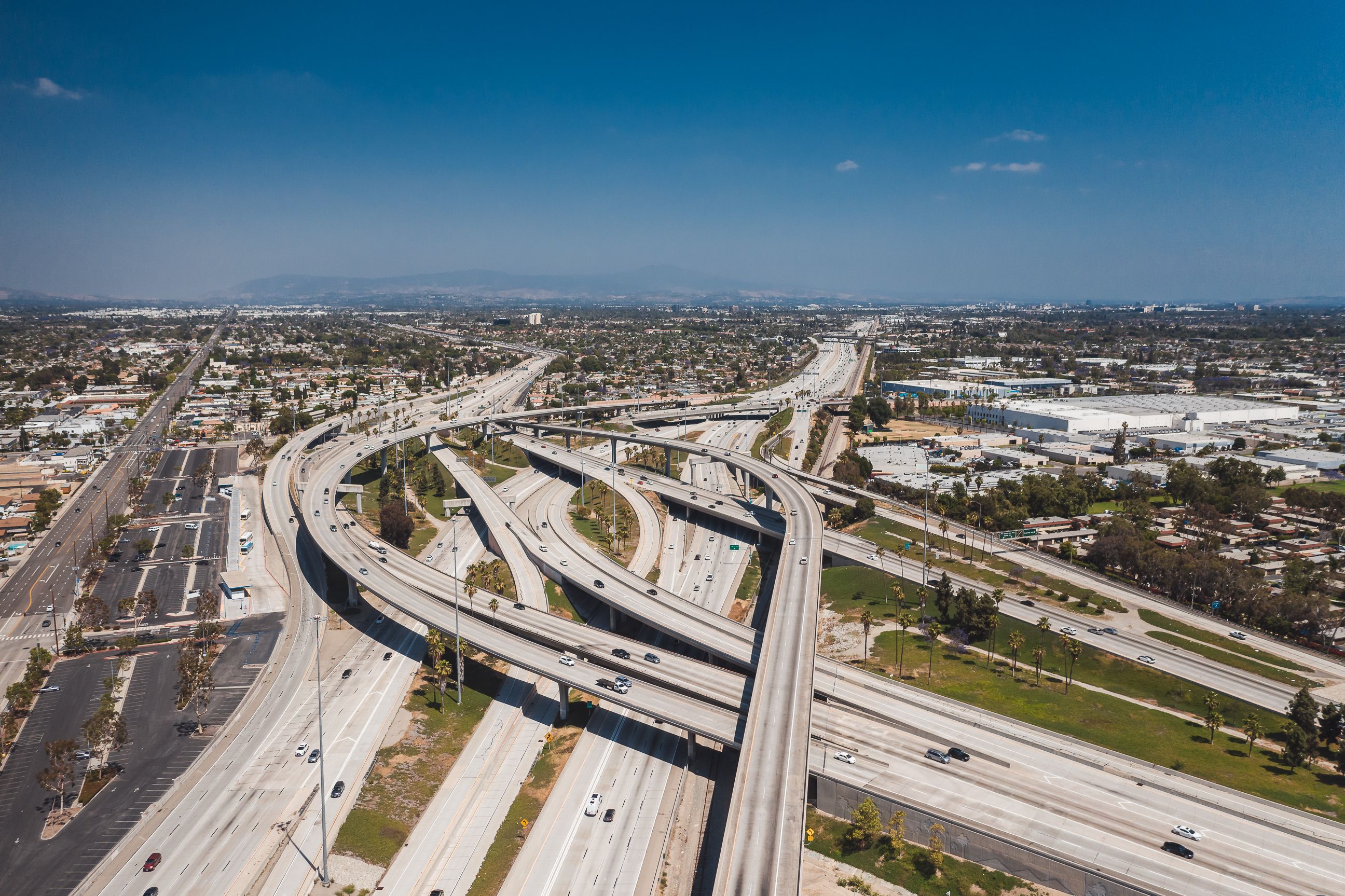
Traffic volume is not a vibe. It is a number that comes from a widely used government traffic count, essentially a daily average of how many vehicles pass a point. The famous figure of more than 550,000 vehicles a day traces to the southern portion of the East LA Interchange and to data collected in 2008. That is why it sounds definitive. It paired a huge count with a simple claim and then repeated itself for years.
Since then, the totals have come down. More recent reporting places the overall daily volume around 430,000. If you want something even more granular, the 2023 Caltrans counts for individual approach segments feeding into the tangle sit around 214,000-219,000. Those approach counts are not a sum of the entire junction. They are snapshots of the streams that pour in, a way to understand scale without pretending one number can stand for the whole.
None of that makes the place small. It just makes it specific. Big is not the same as biggest, and the distinction matters when a claim turns into a moniker. The East LA Interchange earned a long-standing reputation; the live data now asks us to say that out loud in the past tense and keep driving.
The name works because it collects four corridors that matter in a way few places can. I-5 runs a spine through the state. I-10 runs a line across it. US-101 and SR-60 bend into and out of the basin. When those routes meet in Boyle Heights, the meeting looks like Los Angeles in miniature: streams arriving from everywhere, trying to keep moving at once.
The interchange's reputation spread because a single, outsized number gives shape to something drivers feel but rarely quantify. You sense the scale in the long curve of a ramp and the low hum that never shuts off. Then you see a number like 550,000 and the feeling snaps into focus. The same thing happens in reverse with 430,000. It is still huge. It just changes the way the mind rounds the story of the place.
That is the hidden vertigo of this junction. The physical structure has not vanished. The lanes are still there, river-wide. What shifted was the count we use to talk about it. If you commute across it, the lived experience may not register the difference between half a million and a number that starts with a four. But the claim on global bragging rights does.
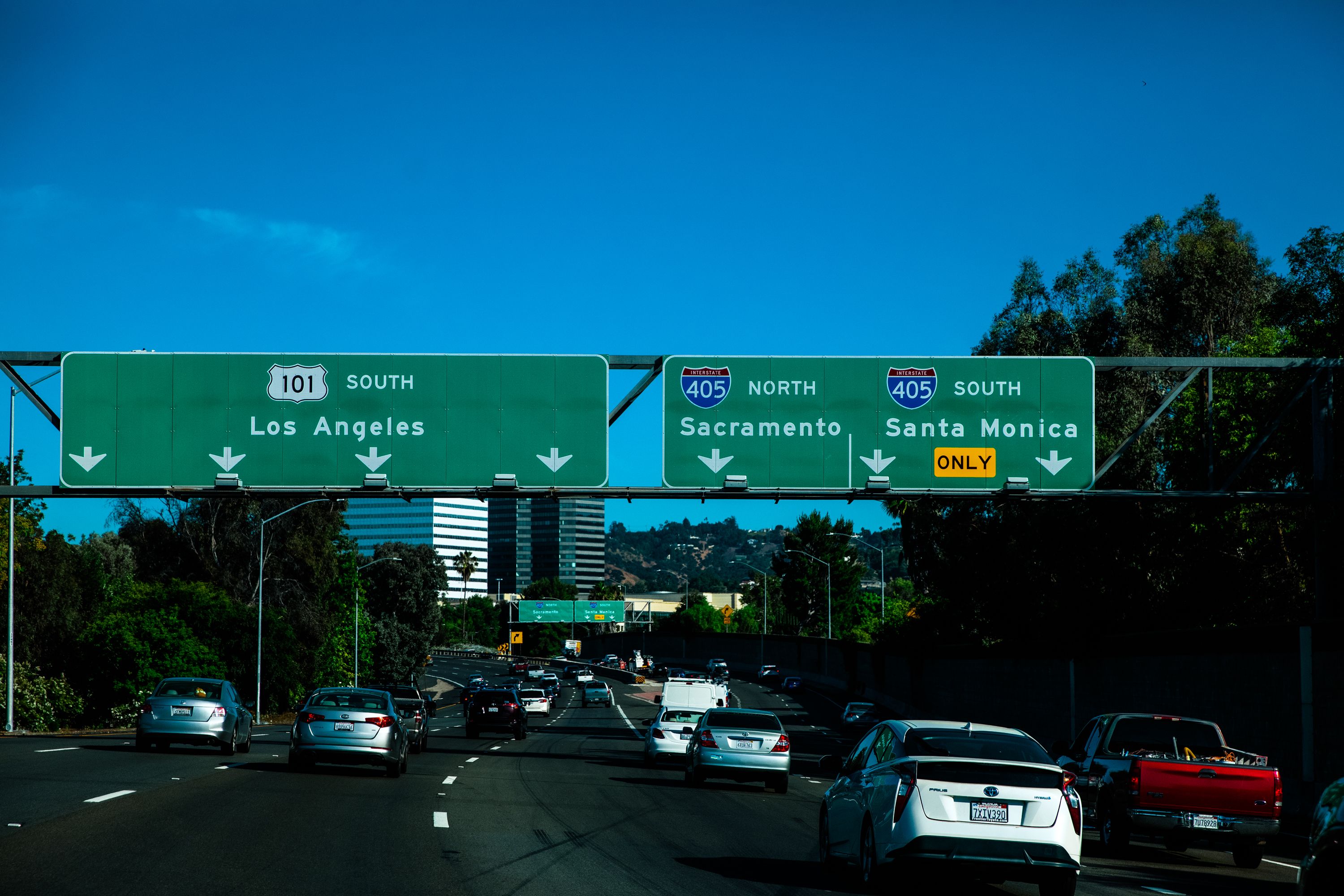
For a long time the shorthand was simple. The East LA Interchange was the busiest interchange in the world. The problem with that sentence is not the spirit. It is the tense. The number that powered it is old, and traffic has measurably declined since. Say instead that the place has long been called one of the busiest, and now anchor the words to the more current counts.
There is a practical reason to be precise. Anyone can repeat a boast. It takes a city to live with the consequences of believing it. If you plan, build, and argue based on a myth, the myth wins the meeting. If you date the statistic and keep the newer figures in view, you build for what is actually happening, not for what was true a generation ago.
This is not an argument against the interchange's scale. It is an argument for scale that can be checked. The older number still has value as context, a way to understand why the East LA Interchange became a symbol in the first place. The newer counts tell us how that symbol fits into the Los Angeles of right now.
Because the interchange sits in Boyle Heights, a neighborhood with its own layered story, the conversation often reduces the surroundings to background. That is another way a myth flattens what it touches. A junction this large demands attention. It also draws attention away from the ground it occupies. If you only know Boyle Heights as a name on a sign you sail past on I-5 or SR-60, you know how an idea can eclipse a place.
There is a particular kind of Los Angeles moment that happens here. You crest a ramp, the lanes fork, and the skyline jumps into view like a cut in a film. Then it is gone. What lingers is the sense that something vast just happened and you were a small piece moving through it. The counts, whether they read 219,000 on a segment or 430,000 in a day, are the ledger of that feeling.
Numbers are cold until you fit them to a day. Stand still in Boyle Heights for a minute. Imagine the entire region tilted slightly so the cars slide toward this one set of lanes. Now imagine writing that tilt down as a daily average. That is all a traffic count is. The jaw-dropping part is that the average can still be the better part of half a million.
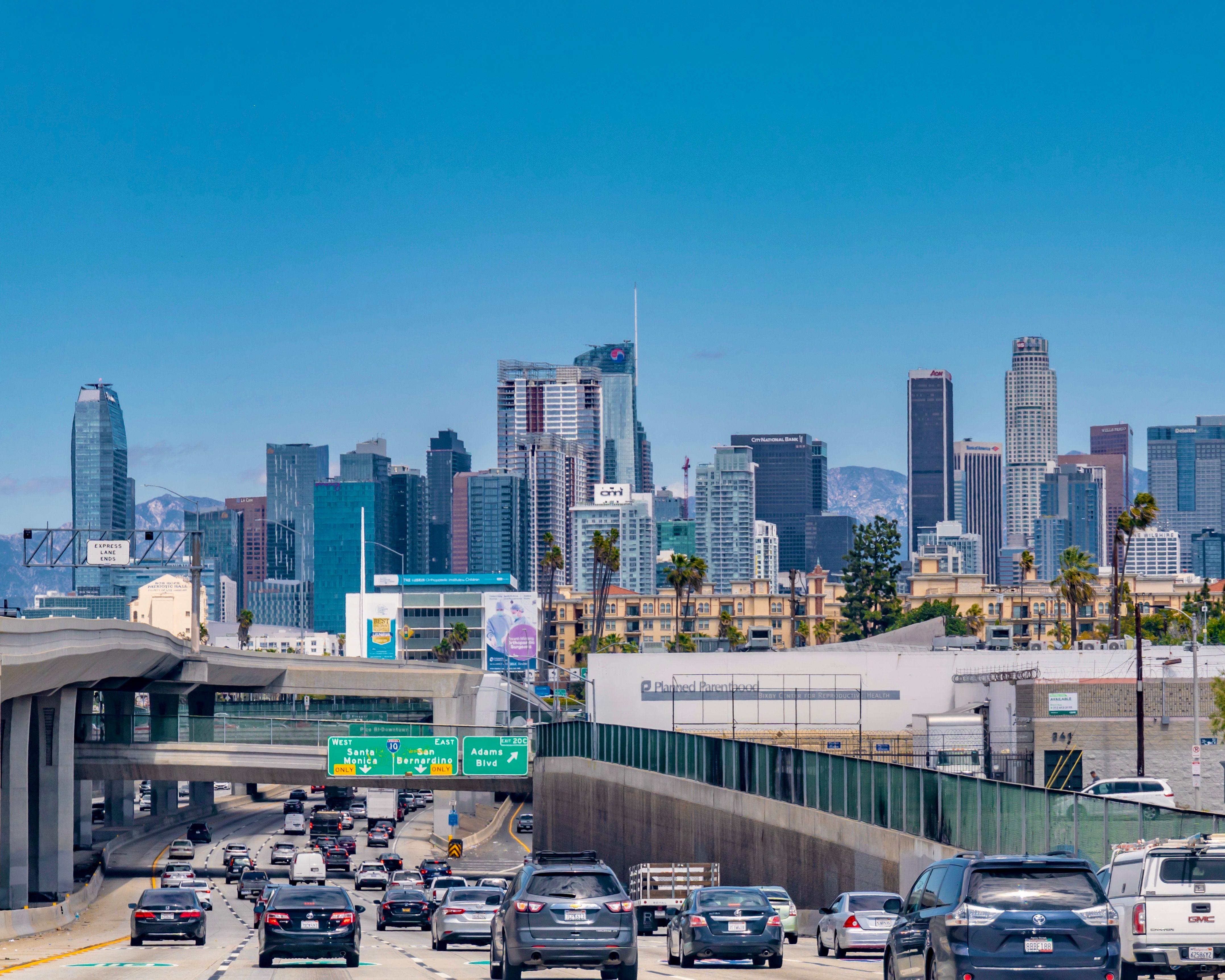
Start with what is verifiable. The East LA Interchange is where I-5, I-10, US-101, and SR-60 converge in Boyle Heights. A widely cited historical figure put daily traffic on its southern portion at more than 550,000 in 2008. More recent reporting puts the daily volume around 430,000, and in 2023 Caltrans recorded individual approach segments around 214,000-219,000. Each number is true in its proper frame. None of them alone can carry the entire legend.
Then keep the language honest. The interchange has long carried a reputation as one of the busiest on earth. Let the word long do its work. It signals that reputations travel farther than spreadsheets and that myths are simply facts that have stopped updating.
Finally, allow for feeling. The emotional register here is not nostalgia or civic chest thumping. It is the shock of hidden scale. The understanding that something vast can live under a commute and go mostly unregistered until a count pulls it into daylight.
So yes, the number that made the East LA Interchange famous is dated. The place it named is still immense. If you need a single line to remember, remember this one: a once half-million-a-day junction that today moves in the neighborhood of 430,000, with 2023 approach streams around 214,000-219,000. That is enough scale for any story. It is also the kind of precision a city this large deserves.