
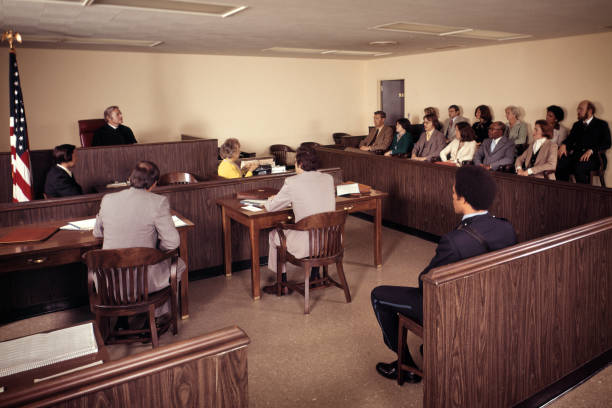
You show up for a 9:00 a.m. motion at Stanley Mosk Courthouse and the clerk says the department does not provide an official reporter for unlimited civil. If you want a verbatim record, you need to arrange one. That is a common Los Angeles experience, and the reason court reporters feel both essential and, at times, hard to find.
In Los Angeles, the “record” is created in a few different ways depending on the case type and courtroom. Some departments have an official court-employed reporter, some expect the parties to bring a certified shorthand reporter to serve as an official reporter pro tempore, and some courtrooms use electronic recording as the official record. Knowing which system you are walking into, and what it costs to get a transcript out of it, saves time and prevents hearing-day surprises.
Los Angeles Superior Court’s standing policy makes the split plain. Official court reporters are normally available for felony criminal and juvenile proceedings. They are not normally available for unlimited civil, and availability in family and probate is limited and scheduled at the court’s discretion, including certain domestic violence or restraining order calendars. In limited civil, misdemeanor, and infraction matters, the court generally uses electronic recording as the official record of the proceeding, rather than a stenographic reporter.
For a fee-waiver party, there is a safety valve. Under statewide rules, a litigant who has been granted a fee waiver may request an official court reporter. In Los Angeles, the court’s general order directs a fee-waiver party to file the request on the court’s form, and to do so about 10 calendar days before the hearing if possible. If the court cannot provide a reporter on the day of the hearing, the matter may be continued, which is why making the request in advance is worth the calendar entry.
When the court does not provide a reporter, parties may stipulate to appoint a certified shorthand reporter to serve as an official reporter pro tempore for that hearing or trial. Los Angeles posts the appointment forms for this arrangement and notes that the arranging party pays the reporter’s attendance fee. Some individual departments say this explicitly on their courtroom-information pages. For example, a civil department at Stanley Mosk states that official reporters are not provided for hearings or trials in that department, and it points parties to the pro tempore process.
Two downtown buildings showcase how the policy plays out on the ground. Stanley Mosk Courthouse, at 111 N Hill St., Los Angeles, CA 90012, houses many civil departments where no official reporter is provided and parties arrange a pro tem if they need a record. A few blocks away, the Clara Shortridge Foltz Criminal Justice Center, at 210 W Temple St., Los Angeles, CA 90012, handles felony and other criminal calendars where official reporters are the norm. Public hours for LA courthouses are commonly posted as Monday–Friday, 8:00 a.m. to 4:30 p.m., excluding court holidays, so plan security screening and elevator time accordingly.
California law sets the baseline per‑word compensation for transcripts. The current statutory rate is $1.13 per 100 words for the original, and $0.20 per 100 words for a copy purchased at the same time. These per‑word rates apply whether the transcript is from a court-employed reporter or an officially appointed pro tem, and they are the figures reporters use when billing for transcript production.
Separate from transcript production, there are courtroom attendance fees when a court-employed reporter is provided in a civil proceeding. State law requires courts to collect $30 for a proceeding anticipated to last one hour or less. For proceedings that last more than one hour, the court charges a half‑day fee equal to its actual reporter cost, allocated among the parties. The exact half‑day amount is set by each court under a statewide rule that ties the figure to reporter salary and benefits plus an indirect-cost percentage. In Los Angeles, that half‑day charge applies only when the court is actually providing the reporter for your civil proceeding.
Appeals require a separate deposit so the reporter can begin work. In an unlimited civil appeal, the reporter’s initial deposit is typically $325 for up to three hours of proceedings designated for the transcript, or $650 for a full day or fraction exceeding three hours. If the estimate later proves too low, the reporter may seek an additional deposit. Only the reviewing court can extend the reporter’s time to prepare the transcript, and the default rule gives the reporter 30 days after notice to prepare and certify it.
One more cost lives outside the transcript itself. If you need supporting documents from the case file, LA Superior Court’s online system charges $1.00 per page for the first 5 pages of a PDF, then $0.40 per page after page 5, capped at $40 per document. If you are trying to locate a civil case number by name, the name-index system charges $4.75 per search for guest users, with a discounted sliding scale for registered accounts.
When the court uses electronic recording as the official record, it is not a second‑class record, just a different path. In Los Angeles, electronic recording is standard in limited civil, misdemeanor, and infraction proceedings. The audio is captured under the authority of state law and court rules and serves as the official verbatim record of the proceeding in those case types. If you later need a transcript from an electronically recorded hearing, a transcriber uses that audio to produce an official transcript that follows the same formatting and certification requirements as one produced from stenographic notes.
What you get depends on what you order. If you order an audio recording where permitted, you receive the court’s digital file. If you order a written transcript, you receive a certified text document produced to the same specifications appellate courts expect from a reporter’s transcript. Either way, the per‑word rates for a transcript come from the same statute that governs stenographic transcripts, so the $1.13 per 100 words original and $0.20 per 100 words copy framework still applies when a transcript is produced.
Remember that an audio recording is not always an option, even in courtrooms that have the equipment. Criminal felonies handled at the Clara Shortridge Foltz Criminal Justice Center are reported stenographically by court reporters rather than electronically recorded. In appellate contexts, the rules control what form of record a reviewing court will accept for a given case type, so check the rule set before assuming an audio file will meet a record‑on‑appeal requirement. If you are in doubt about what form of record your department uses, the courtroom’s public page often states whether a reporter is normally provided, and calendar postings note when a reporter will not be available for non‑trial civil matters.
On the practical side, Los Angeles manages the record with a mix of logistics and retention rules. If you are arranging a reporter pro tempore, bring the signed appointment order and stipulation to the hearing so the judge can confirm the reporter’s status on the record. Reporters typically ask counsel to spell proper names at the start of a proceeding, and judges sometimes pause to ensure exhibits are clearly identified so the transcript index can be built correctly. These are small minutes that save hours when someone needs to find a quote six months later.
Retention of the raw record is also set by statewide law. A court reporter’s shorthand notes must be kept for 10 years in criminal and juvenile proceedings, and for 5 years in civil and all other proceedings. For officially electronically recorded proceedings, the retention periods are laid out in the trial court records manual and related statutes, with special rules for capital cases. The takeaway is that you have a window of years—not weeks—to request older transcripts, and that the reporter who took the notes gets the first opportunity to transcribe them if a transcript is ordered later.
Hearing-day timing matters, too. Most LA courthouses open to the public at 8:00 a.m., including Stanley Mosk Courthouse on Hill Street and the Clara Shortridge Foltz Criminal Justice Center on Temple Street. Many civil calendars start at 8:30 or 9:00 a.m., and security lines can run long on Monday and Friday. When a reporter is traveling to cover your matter as an official reporter pro tempore, allow enough lead time at screening so everyone is in the room when the judge calls the case.
The choices in Los Angeles usually boil down to three paths. Here is how they differ in where they are available, how you request them, and what they cost in stable, published terms.
| Option | Where used in LA | How to get it | Cost signals | What you receive |
| Official court-employed reporter | Normally in felony criminal and juvenile; limited and scheduled in some family/probate calendars | Provided by court when available; fee-waiver party may request using the court’s form about 10 days ahead | $30 for proceedings anticipated to last ≤ 1 hour; for > 1 hour, a half‑day fee set by the court based on actual cost and charged to parties | Certified reporter’s transcript at $1.13 per 100 words original and $0.20 per 100 words for a same‑time copy |
| Official reporter pro tempore (privately retained) | Common in unlimited civil departments at Stanley Mosk Courthouse, 111 N Hill St., Los Angeles, CA 90012 | Parties stipulate and submit the court’s appointment order for approval in the hearing department | Attendance fee set by agreement with the reporter; transcript billed at the statutory $1.13/$0.20 per 100 words rates | Certified reporter’s transcript that satisfies appellate rules for a reporter’s transcript |
| Electronic recording | Limited civil, misdemeanor, and infraction calendars | Used by the court as the official record; order audio or a certified transcript later | Audio or copy fees per the court’s schedule; any written transcript produced from the audio is billed at $1.13/$0.20 per 100 words | Official audio file or certified transcript usable for appeals where permitted |
For appeals in unlimited civil cases, keep the deposit requirement in mind: $325 for up to three hours of designated proceedings, or $650 for a day or fraction exceeding three hours. If you need to attach exhibits from the case file, LA Superior Court’s online document system charges $1.00/page for the first five pages, then $0.40/page, capped at $40 per document. If you do not know the case number, the civil name-index search charges $4.75 per search for guest users.
Reporters do more than “type what people say.” In a Los Angeles courtroom, the reporter manages the creation of an official record that has to meet formatting and certification standards the reviewing courts will accept. That includes building a word‑searchable index, marking when a recess starts and ends, flagging exhibits so they appear in the transcript’s index correctly, and inserting notations when the judge orders sidebar or off‑the‑record discussions.
In criminal matters, especially at the Clara Shortridge Foltz Criminal Justice Center at 210 W Temple St., Los Angeles, CA 90012, the reporter’s notes often become the historical archive of what was said at a crucial hearing. Those notes are preserved for 10 years in criminal and juvenile cases. In civil proceedings, reporters’ notes are preserved for 5 years. When a transcript is ordered later, the reporter who took the notes gets the first chance to produce the transcript, which is one reason contact information for reporter services is posted by the court.
Realistically, this is why knowing your department’s practice helps. Some civil departments post that they do not supply a reporter; if you need a record, you will need to arrange a pro tem and bring the completed appointment order. If your client has a fee waiver, filing the court’s request form early gives the clerk’s office time to match a reporter to your date or to advise you if none will be available so you can decide whether to seek a continuance. And if you are appearing in a limited civil unlawful detainer, the courtroom is likely using electronic recording and can provide the audio record later on request.
Hours and logistics round out the picture. Public entry to the downtown buildings, including Stanley Mosk and Clara Shortridge Foltz, is generally 8:00 a.m. to 4:30 p.m. on weekdays. The line at Hill Street or Temple Street can add 10–20 minutes on busy mornings. If you are coordinating with a reporter pro tempore, tell them exactly where to meet you and allow time for screening, elevators, and the quick on‑the‑record appointment confirmation with the judge before testimony begins.
Need a transcript later and do not remember the case number? LA Superior Court’s name‑index search will find it for a fee of $4.75 per search if you use the guest option. When you download filed documents from the case, the PDF charges are $1.00/page for pages 1–5 and $0.40/page thereafter, with a $40 cap per document. Those are predictable, stable fees you can build into a cost estimate for a client who needs the record copied in addition to the reporter’s transcript.
Usually not. Los Angeles policy states that official reporters are not normally available for unlimited civil. Parties commonly stipulate to appoint a certified shorthand reporter as an official reporter pro tempore if they want a stenographic record, and the arranging party pays the reporter’s attendance fee.
Transcript production is billed at statewide rates of $1.13 per 100 words for the original and $0.20 per 100 words for a same‑time copy. If the court provides a reporter in a civil matter, it also collects $30 for proceedings anticipated to last one hour or less, and a court‑set half‑day fee for longer hearings.
Limited civil, misdemeanor, and infraction calendars in LA typically use electronic recording as the official record. You can order the audio where permitted or request a certified transcript produced from the recording, and that transcript follows the same statutory per‑word pricing as a stenographic transcript.
Reporter notes are preserved for 10 years in criminal and juvenile cases and 5 years in civil and other proceedings. If a transcript is later ordered, the reporter who took the notes gets the first opportunity to prepare it.
In practice, you narrow your path by matching the case type to the record source. If your matter is unlimited civil at Stanley Mosk, plan for a pro tem if you need a stenographic record; if you are in limited civil or a misdemeanor, expect an electronic recording that you can order as audio or as a transcript later.
Published: September 7, 2026