
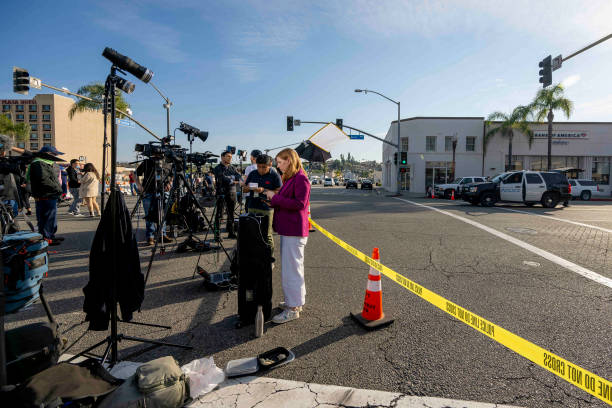
You hear helicopters over Koreatown, see sirens stack on the 101, and your group text starts firing off guesses. Inside every local newsroom, the assignment editor is doing the same thing you are, just with more screens and a checklist. Here is how breaking coverage actually moves across Los Angeles in real time, and the exact places Angelenos use to track it as it unfolds.
On a normal night shift, one producer watches the wires while an assignment editor triages tips. In LA, the earliest pings that move a story rarely come from social posts. They are structured feeds: Caltrans for lane closures and full freeway shutdowns, the regional 911 incident boards a station is authorized to monitor, and city or county emergency alerts. If a full freeway closure populates on Caltrans QuickMap and a second confirm comes from a first responder incident log, you’ll hear “we’re up” in the newsroom and a live stream gets stood up within minutes. QuickMap has layers for traffic speed, construction lane closures, CHP incidents, and state camera snapshots; camera refresh rates vary by location and equipment, and its push notifications have been temporarily disabled in the mobile app, so producers rely on the map view rather than expecting a phone alert to pop.
City alert systems are the next gate. The City of Los Angeles runs NotifyLA, an opt-in system that can send recorded phone calls, texts, or emails in English and other languages when the City issues instructions like evacuation orders. It is free to sign up and it is one of the few alert tools editors treat as an authoritative “go” on protective actions. The County runs Alert LA County alongside Wireless Emergency Alerts for regionwide incidents. If you receive an Alert LA County text, it will display from sender ID 65513.
When a story is still developing, producers also call 311 for non-emergency city information, especially to confirm utility or street-service impacts before air. The City of Los Angeles 311 call center answers Monday through Friday 7:00 a.m. to 7:00 p.m., and on weekends and holidays 8:00 a.m. to 4:45 p.m. If you see a “call center open” line in a chyron, that timing is the reason it appears.
This is also the point where encryption shapes what newsrooms can and cannot verify on their own. Several municipal police departments in LA County now run fully encrypted primary channels. Glendale Police, for example, switched its radio communications to encrypted operations on October 2, 2023. For assignment editors, that means the public scanner audio many Angelenos used to follow is no longer a reliable early signal across the whole county. Fire radio remains more accessible, and both the Los Angeles Fire Department and Los Angeles County Fire Department participate in PulsePoint, a smartphone system that surfaces nearby cardiac-arrest alerts and basic incident types to the public. Editors keep PulsePoint up to understand incident clustering, but it is not a substitute for official confirmations.
LA has one of the deepest benches of live local news in the country. Several stations can add an extra block of live coverage inside a minute because their control rooms are staffed around the clock.
KTLA 5 runs long, live local blocks in the morning; the KTLA Morning News publishes its weekday window as 4 a.m. to noon, with additional midday and afternoon news blocks that let the desk drop into live shots without spinning up a new team. KTLA also offers free breaking-news email alerts that mirror the station’s on-air language, which is useful if you cannot stream immediately.
KCAL News centralized the CBS-owned duopoly’s local branding and launched a seven-hour morning newscast. On weekdays, “KCAL News Mornings” runs from 4 a.m. to 11 a.m. That footprint matters because if something breaks at 10:07 a.m., KCAL is already live and can move a helicopter and a reporter while keeping anchors in place. KCAL’s 24/7 streaming channel also carries rolling local updates outside traditional linear blocks, which is why a push alert from them often lands with a “watch live now” prompt in the same minute.
NBC4 can move quickly in both morning and evening. “Today in LA” airs weekdays 4 a.m. to 7 a.m. and on weekends 7 a.m. to 8 a.m. NBC4’s site and app publish a live player with upcoming blocks labeled, so if the newsroom flips the rundown to take a freeway pursuit or weather emergency, you will see the player headline change first, even before a push alert arrives.
ABC7 packages its breaking coverage with regular morning and midday live streams and lists a staffed news tip line at 818-863-7008. That desk will not read your tip on air, but it absolutely informs whether a second live helicopter launches, or whether digital producers spin a short live update to the app in between newscasts.
FOX 11 runs “Good Day LA” on weekday mornings and keeps its News & Good Day LA desk at 310-584-2025 posted publicly for news tips. Morning shows like KTLA’s and FOX 11’s serve as the backbone on days when multiple unrelated breaking items stack up across the basin. The show already has anchors, weather, traffic, and a control room live, so adding two minutes of fresh video from Mid-City does not require waiting for an evening crew to arrive.
On cable, Spectrum News 1 is a true 24-hour local channel for subscribers, carried on channel 1 across the Los Angeles service area. Because it operates as a rolling local news wheel, it can interrupt with a presenter and live hit at :07 past the hour just as easily as at :37 past. If you don’t have Spectrum, this is the one you cannot stream without a pay-TV login; the rest above are free over the air in LA, with parallel streams in their apps during scheduled blocks.
When cell networks clog or you are in the car trying to pick the right offramp before a closure, radio still wins for speed. The Los Angeles market has three useful approaches for breaking coverage.
KNX News is the region’s all-news format. In May 2026, Audacy ended the 97.1 FM simulcast and KNX continued its all-news service on 1070 AM and digital streams. The format keeps its “traffic and weather together every 10 minutes on the 5s,” which is why many Angelenos reflexively check in at :05, :15, :25 and so on when a freeway slows. If you want one signal you can leave on for hours during a wildfire or a wind event, KNX is built for that use case.
LAist 89.3 pairs a live, topic-driven mid-morning show with frequent local headlines. AirTalk airs weekdays 9 a.m. to 11 a.m., and the newsroom also publishes The LA Report, a short daily news update, as both a podcast and newsletter. On a day with a City Hall development or a school closure, LAist will often slot a quick, reporter-led segment into the next top-of-hour news break even outside the main shows.
KCRW 89.9 runs Morning Edition 3 a.m. to 9 a.m. weekdays with local newscasts and frequent traffic inserts, then updates through the day during other programs. If you commute early or late, KCRW’s half-hourly headlines can be the fastest way to learn whether a brush fire has jumped a canyon or a closure has expanded from one lane to three.
Editors do rely on push alerts to pull you into live coverage, but each alert has a different job. City and County alerts are there to tell you what to do. Newsroom alerts are there to tell you where to watch or listen.
For official instructions, register for both NotifyLA and Alert LA County. NotifyLA is the City’s system for Los Angeles residents, businesses, and visitors, able to send phone, email, or SMS in multiple languages at no cost. Alert LA County covers unincorporated county areas and many contract cities, and it uses the Genasys platform for opt-in texts and emails; texts arrive from 65513. Wireless Emergency Alerts are separate and do not require signup, but those are sent less frequently and at broader geographic scopes. If you subscribe to NotifyLA by text and want to stop, replying with STOP will unsubscribe you.
For news alerts, pick two sources you will actually open. The Los Angeles Times offers free breaking-news emails plus morning and evening roundups; the evening product is billed to land on weekday evenings with the day’s biggest developments. KTLA publishes free “Breaking News” and “Morning News” email lists. NBC4 lets you choose breaking, daily roundup, and other topic newsletters. Newsroom alerts are designed to pair with a live link or TV block already in progress, so when you hear a push, a control room is usually already rolling a live shot you can join immediately.
If you need a human for non-emergency questions while news is still developing, LA’s 311 call center is staffed 7:00 a.m. to 7:00 p.m. weekdays and 8:00 a.m. to 4:45 p.m. weekends and holidays. Outside those hours, 211 LA remains available 24/7 to route you to social and disaster recovery resources, but it is not a breaking-news tip line.
Ten years ago, a lot of Angelenos tracked breaking police activity on scanner apps. That picture is mixed now. A growing list of LA County police agencies run fully encrypted talkgroups that cannot be monitored by the public, including Glendale Police. Even where dispatch remains in the clear, sensitive tactical channels are often encrypted. For open channels, Fire radio and the PulsePoint app still offer useful, lawful situational context, especially for spotting clustering of medical calls or a new brush start. Keep in mind that PulsePoint is optimized for cardiac-arrest awareness and quick CPR, not as a general news feed, so assignment desks treat it as supplemental to official incident confirmations.
Transportation data remains the most consistently public and fast. Caltrans QuickMap, especially the Lane Closures and Full Closures layers, is how both viewers and producers know a freeway problem is the real thing. Because QuickMap’s push notifications are temporarily disabled on mobile, open the map and tap closures instead of expecting an alert. If you need a phone tree because you cannot safely check a screen, tune to KNX at the next “on the fives” update and you will hear which lanes are blocked and where CHP is running traffic breaks.
| Outlet | Format | When live breaking coverage is most available | Access or price | Specific advantage |
| KNX News 1070 AM | All-news radio | 24/7, with traffic and weather every 10 minutes on the 5s | Free over-the-air on 1070 AM; FM simulcast ended in May 2026 | Most reliable freeway incident timing when you are driving |
| KCAL News | Local TV and 24/7 stream | Weekday mornings 4 a.m. to 11 a.m. are live, plus rolling streaming breaks | Free OTA; streaming channel is free in the station app | Already live on-air during late-morning breaking events |
| KTLA 5 | Local TV | Weekday KTLA Morning News 4 a.m. to noon, with midday and afternoon blocks | Free OTA; free email alerts for breaking and morning updates | Long live windows make quick cut-ins possible |
| NBC4 “Today in LA” | Local TV | 4 a.m. to 7 a.m. weekdays; 7 a.m. to 8 a.m. weekends | Free OTA; optional free newsletters | Early morning coverage with fast live-player updates |
| Spectrum News 1 | 24/7 local cable channel | All day in a continuous wheel; breaks in for live hits any time | Included with Spectrum TV on channel 1 | Rolling format means fewer gaps between live inserts |
| LAist 89.3 | Public radio + podcast | AirTalk live weekdays 9 a.m. to 11 a.m.; daily LA Report updates | Free OTA; podcast and newsletter are free | Explains policy and city decisions quickly after they break |
| KCRW 89.9 | Public radio | Morning Edition 3 a.m. to 9 a.m. weekdays with local headlines | Free OTA | Early-morning hits before most TV blocks begin |
Assignment editors triage with two questions: is the public at risk and can we verify it fast. A full freeway closure, a red-flag wind-driven fire, or a police instruction to avoid an area moves to the top of the rundown. The first confirmation often arrives from a structured source, not a social clip. Caltrans QuickMap will show a full closure on the 5 through the Grapevine; that goes to the traffic anchor and radio partners immediately. If NotifyLA issues an evacuation order, a lower-third banner will tell you which neighborhoods it covers and which intersections are staging areas. If it is a complex investigation with no public action attached, expect a shorter initial live hit with a promise to update at the top of the next hour.
Editors also think in formats. If a fire jumps a ridge at 6:12 a.m., the fastest live picture is likely a helicopter on KTLA or KCAL, while radio fills in closures and detours until a ground crew arrives. If a corruption indictment drops at 9:31 a.m., LAist will likely book a quick explainer on AirTalk inside 90 minutes, while KNX carries wire and courthouse updates on the :20 and :50 business wheel. That is not one outlet “beating” another. It is the shape of LA’s ecosystem and the way a well-run desk chooses the fastest path to give you something verified.
One more internal rule that explains what you see: there is a difference between “we have a situation” and “we have protective actions.” A large police presence without a directive to the public will often get a shorter live hit framed as “developing.” The moment the City or County issues instructions like “shelter in place east of X street,” that phrasing will appear on air and in push alerts, often word-for-word from NotifyLA or Alert LA County. That traceability is intentional.
Open Caltrans QuickMap and look for orange cones or red closure markers near you, then flip on KNX 1070 AM and listen for the next update “on the fives.” If a protective action is in play, you will also see a NotifyLA or Alert LA County message, which is how stations phrase on-air instructions.
Most LA stations are free over the air and stream during live news blocks. KTLA, KCAL, NBC4, and ABC7 all publish live players in their apps when control rooms are active. Spectrum News 1 is the exception and requires a Spectrum subscription on channel 1.
They can help, but do not expect a complete picture. A number of municipal police departments in LA County now run encrypted systems, including Glendale Police. Fire radio remains more open, and PulsePoint can show incident clustering and cardiac-arrest activations near you, which editors use as supplemental context.
Keep NotifyLA and Alert LA County on because they carry protective actions. For newsrooms, pick one or two free lists you’ll actually open, like KTLA’s breaking emails and NBC4’s daily headlines, which often arrive alongside live video during their morning blocks.
When you want fewer apps and faster certainty, think like an assignment editor: check QuickMap for closures, listen to KNX for timing, and keep one TV station and one alert system you trust. That two-plus-two setup covers almost every live situation in Los Angeles without drowning you in noise.
Published: September 4, 2026