
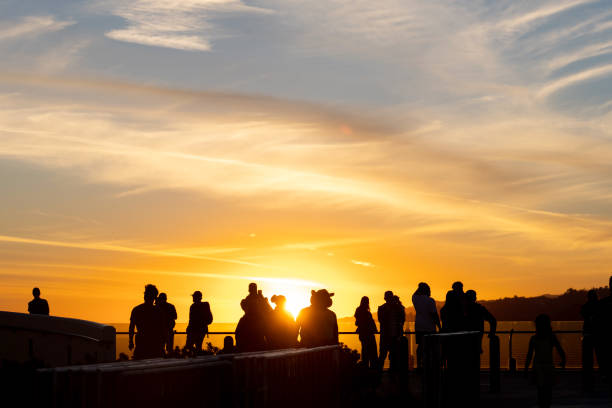
You can spot the white domes from the 5, from Hollywood Boulevard, even from a middle seat on final approach to LAX. I still remember when a slow evening meant you could roll right up West Observatory Road after dinner and be on the roof by twilight. Those days are gone. Crowds are bigger, the parking is pay-and-display, and the phones up here lose signal just when your rideshare is trying to find you. But the heart of the place has not changed since 1935: step inside and Los Angeles becomes a city that looks up.
If you are weighing whether it is worth the hill and the hassle, the short answer is yes. The longer answer is knowing how this place really works. Admission to the building is free, the planetarium is a paid ticket with specific showtimes, and there are simple ways to avoid traffic if you do not insist on driving to the front door. The details below save time, money, and a small amount of sanity.
The Observatory opened to the public on May 14, 1935, the rare civic promise delivered as a gift: a science museum, a motion-picture theater, and a public telescope anyone could use for free. That tradition continues most evenings the building is open. Ask a Museum Guide and they will point you to the historic 12-inch Zeiss refractor in the east dome and to the rooftop and lawn stations that host free telescope viewing when the sky cooperates.
Inside, the building is a working museum and a lookout tower for the entire basin. The main address is 2800 East Observatory Road, Los Angeles, CA 90027, with a general information line at (213) 473-0800. You can spend an afternoon without a ticket seeing the coelostat’s live image of the sun in Ahmanson Hall of the Sky, watching the Tesla Coil throw six-minute arcs on the mezzanine, and standing in the Gottlieb Transit Corridor for the brief, satisfying “local noon” talk when the sun crosses the meridian.
The Samuel Oschin Planetarium, a 290-seat theater in the heart of the building, is the one part that is not free. Live shows run every 60–90 minutes on operating days. Tickets are sold at the Observatory for same-day shows only, and you can use cash or a credit card at the main box office or at the self-serve machines around the building.
The Observatory is open Tuesday–Friday, 12:00 p.m.–10:00 p.m., and Saturday–Sunday, 10:00 a.m.–10:00 p.m. It is closed Monday. The grounds and park roads around the building follow Griffith Park hours, generally 5:00 a.m.–10:30 p.m. Admission to the building, terraces, and public telescopes is always free. Expect the heaviest crowds on weekends, during summer and holidays, and right at sunset.
Planetarium tickets are a separate purchase. Current prices posted by the Observatory are $12 for adults (13–54), $10 for seniors (55+), $10 for students and teachers with ID, $8 for children 5–12, and free for children under 5. The theater makes one specific accommodation for families with small kids: children under five are admitted only to the first show of the day each day the building is open, and they sit on a lap. There is no late seating and no refunds once you buy a ticket, so line up 15–20 minutes early on the West Terrace and watch the time.
Free public telescope viewing typically starts around 7:00 p.m. when skies are clear. Telescope lines are cut off by about 9:30 p.m. so demonstrators can finish by closing time. Daytime visitors can still “observe” by heading downstairs to see the live solar image projected by the coelostat, and you can plan around the museum’s short, free programs: the eight-minute Big Picture talk usually repeats several times a day and the Tesla Coil demonstration runs on a posted hourly rhythm well into the evening.
There are four honest ways to reach the building from the flats of Los Feliz and East Hollywood. Only one of them requires you to feed a pay station.
If you want to skip traffic, take the LADOT DASH Observatory/Los Feliz bus. It connects to the Metro B Line at Vermont/Sunset and runs daily from 10:00 a.m. to 10:00 p.m., even on days the building is closed. Buses come roughly every 20–25 minutes and stop right in front of the Observatory. Fares are $0.50 cash, $0.35 with a TAP card, and $0.25 for seniors and riders with disabilities; children 4 and under ride free. Exact change is required on board.
If you prefer to walk, “park-and-walk” is the local move. When the Greek Theatrenot available after 1:00 p.m. and the bus may be delayed by traffic, so check the Greek’s event calendar before you head out. The Observatory’s own pages also warn that road closures are likely when congestion gets heavy.
If you drive all the way up, the lot beside the building and the parallel spots along West Observatory Road and Western Canyon require paid parking during operating hours. Pay stations accept credit cards only and it is pay-and-display, so remember to put the receipt on your dashboard. Busy evenings and weekend sunsets fill those spaces early; when gridlock hits, park roads can close and officers will turn cars around below the hill. If you are using a rideshare, pickups and drop-offs happen just past the horseshoe driveway in front of the lawn, and the inbound park gates close at 10:00 p.m. so make sure your ride is inside Griffith Park by then.
Hiking in is still the classic approach. Trailheads near the Greek Theatre and Fern Dell are the most common starting points, and trail maps in Griffith Park mark the connections from those canyons to the Observatory grounds and on to Mount Hollywood. Cyclists must use paved park roads and rack up at the building; East Observatory Road is now one-way downhill for vehicles, so use West Observatory Road when you climb.
People often ask which is “better,” the paid planetarium show or the free telescopes. They are different experiences. One is storytelling under a precise artificial sky, the other is the real thing, warts and marine layer included. Use this side-by-side to choose your first hour on the hill.
| Experience | Cost | When offered | How it works | Good to know |
| Samuel Oschin Planetarium live show | Adults $12; Seniors/Students $10; Children 5–12 $8; Under 5 free (lap, first show only) | Every 60–90 minutes on operating days | Buy same-day tickets on site; line up 15–20 min early on the West Terrace | No late seating and no refunds; theater seats 290 and fills at peak times |
| Free public telescope viewing | Free | Most clear evenings, roughly 7:00–9:30 p.m. | Queue for the rooftop Zeiss and lawn scopes; staff demonstrators guide your view | Lines are cut off by ~9:30 p.m. so viewing can end by closing; weather rules |
| Exhibit talks and film | Free | Big Picture talk many times daily; Tesla Coil runs from afternoon into evening; “The Once and Future Griffith Observatory” film at posted times | Drop in; no tickets required | Film runs about 29 minutes; Tesla Coil about 6 minutes; Big Picture about 8 minutes |
Start with timing. If you are coming with small children on a weekend, arrive by mid-morning for easier access to parking and to catch that first planetarium show that admits under-fives. If your plan is rooftop viewing, the sweet spot is a late-afternoon arrival, a quick early dinner, then the telescopes when they open around 7:00 p.m. Remember that the DASH bus runs until 10:00 p.m. and drops you right at the front steps, so you can stay for an after-dark city view without dreading the drive down.
Hungry or in need of a coffee? The upstairs café is the Café at the End of the Universe, operated by Wolfgang Puck Catering, with inside seating and a Sunset Terrace reserved for café customers. For souvenirs or a science kit for the kid you are about to turn into an amateur astronomer, the Stellar Emporium bookstore and gift shop is run by Event Network; if you need to check an item they carry, their in-building line is (213) 802-2209.
Some programs reward punctuality. “Local noon” in the Gottlieb Transit Corridor is a short free talk exactly when the sun hits its highest point that day. The Tesla Coil’s six-minute thunderclap runs on a posted series of times into the evening. The eight-minute Big Picture talk repeats throughout the day in the Gunther Depths of Space, no ticket required.
One more inside-baseball note from the Guides. On overwhelming days the Observatory sometimes uses brief capacity control at the front door. It is not a closure, just a short hold to keep the galleries and theaters safe and comfortable, and it usually moves within 5–15 minutes. That is a good moment to step to the south terrace, line up the Hollywood Sign for your photo, and look over the grid from the Downtown skyline to the ocean haze. The view is why this was placed on the south slope of Mount Hollywood in the first place.
The Observatory building, terraces, and public telescope viewing are free. You only need to buy a ticket for a live show in the Samuel Oschin Planetarium. Tickets are sold on site for same-day shows at posted prices, and there is no late seating once a show begins.
Hop on the LADOT DASH Observatory/Los Feliz bus from the Metro B Line station at Vermont/Sunset. It runs from 10:00 a.m. to 10:00 p.m., stops at the front steps, and costs 50 cents cash or 35 cents with TAP. It runs daily, even when the building is closed.
On most clear evenings the free public telescopes open around 7:00 p.m. and lines are cut by about 9:30 p.m. so viewing can end by 9:45 p.m. The rooftop Zeiss refractor and lawn telescopes are staffed by demonstrators who help you find the target and answer questions.
Yes, with a timing caveat. Children under five can attend only the first planetarium show of the day on operating days, and they sit on a lap. All other shows are for ages five and up, and remember there is no late seating for any performance.
If you want a quiet visit, choose a weekday and ride the DASH. If you want a big-city night under the stars, time your arrival to catch the first evening planetarium performance, then head straight to the telescopes when they open.
Published: September 5, 2026